Thursday, 21 July 2011

Bonavista and Elliston, Newfoundland

July 15-17, 2011.  We had a drive of 188 miles from St. John’s to Bonavista Newfoundland. 
3231.1
After setting up and relaxing for a few hours we set off to the center at Bonavista for a dinner put on by the locals.
 
The earliest owner of the Mockbegger Plantation is Joseph Poole, who lived form 1685 to 1771. White had business interests in cod, salmon and seal fisheries, ship building, and a trading company. Since his death, there have been at least nine owners of the property with the property being donated to the Provincial Government in 1980.
    3281 3282            


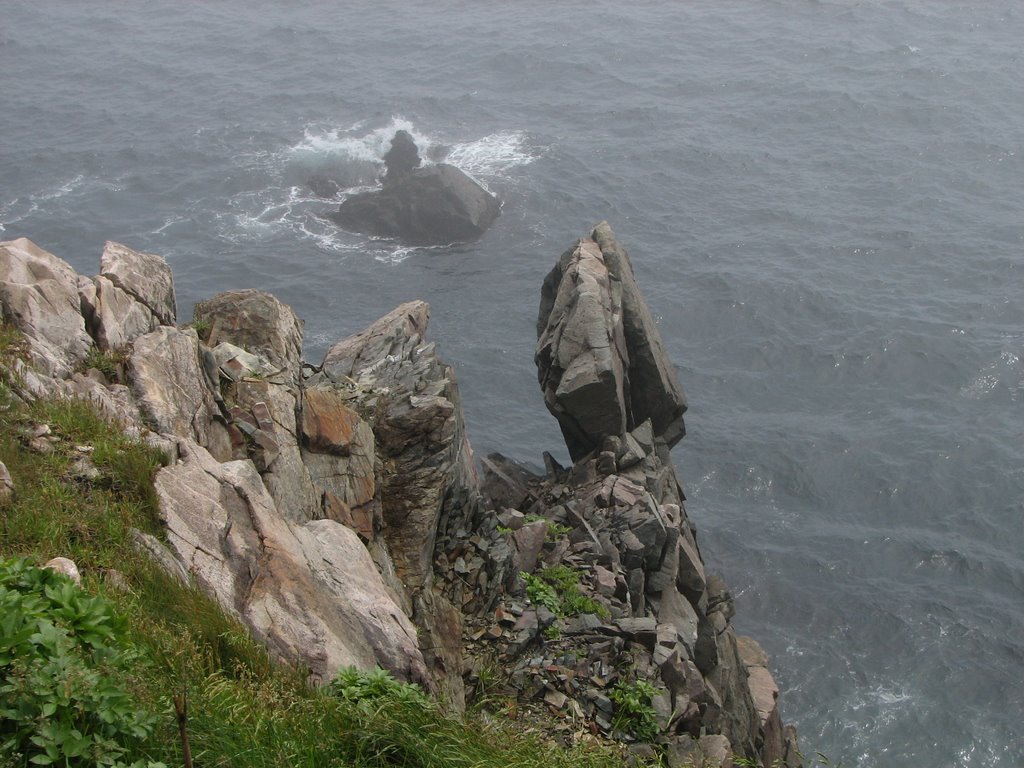
After the plantation we made our firs trip of the day to the Cape Bonavista Lightstation. It was foggy so we took a few pictures with the conditions taking turns between being foggy and the n clearing. There are Puffins and I did get a picture through the fog. The rock formations are stunning.
                               3291.2 3292                   


We decided to go to the  “Dungeon Provincial Park”  hoping that the fog had burnt off there. We were rewarded with excellent conditions.
                                3295 3298


 3299
We wanted to make one more stop before lunch so we went to see the “Mathew”. Bonavista claims that John Cabot sailed here in his ship the “Mathew” and landed in 1497. St. John’s also makes that claim but as a local told us, Bonavista built a replica of the ship and has it on display so that makes their claim valid. The ship is a carvel, which is a small, fast and maneuverable sailing vessel that was developed in the 15th century.  This class of ship was usually 20 to 30 meters long about 7 to 10 meters wide. He had a crew of 18 men. The ship is in a building so pictures of the exterior are limited. Interior pictures are not
                                          3329.1 3331


                                                  3341 3340


After lunch we returned to the light house, Except for a few patched, the fog had cleared, visibility was excellent and the whales were fairly close to shore.
                                                 3385 3361


3357
The pictures of whales I took are on Shutterfly. You can access them at:
I’m not including them here because the next day I got better ones.

We started the next day, July 17, at the Building that housed the Fisherman’s Protective Union (FPU) in the town of Port Union. It was started by William Coaker in 1908. It flourished and lasted until 1960. William Coaker was an above average individual who left school at 14 to take a clerical position with a company and six years later was the company’s owner. Undeterred by bankruptcy when the banks crashed in 1894 he turned to farming, became concerned about the welfare of the fisherman and formed a union to improve their lives. He started a union newspaper and created the Union Trading Company with imported supplies and sold them to the FPU members at cost. He became  Minister of Marine and Fisheries in 1919 and was made a “Knight Commander of the Most Excellent Order of the British Empire for his contributions to Newfoundland”. He died in 1938 and the union lasted until 1960.
                                     3414 3401 


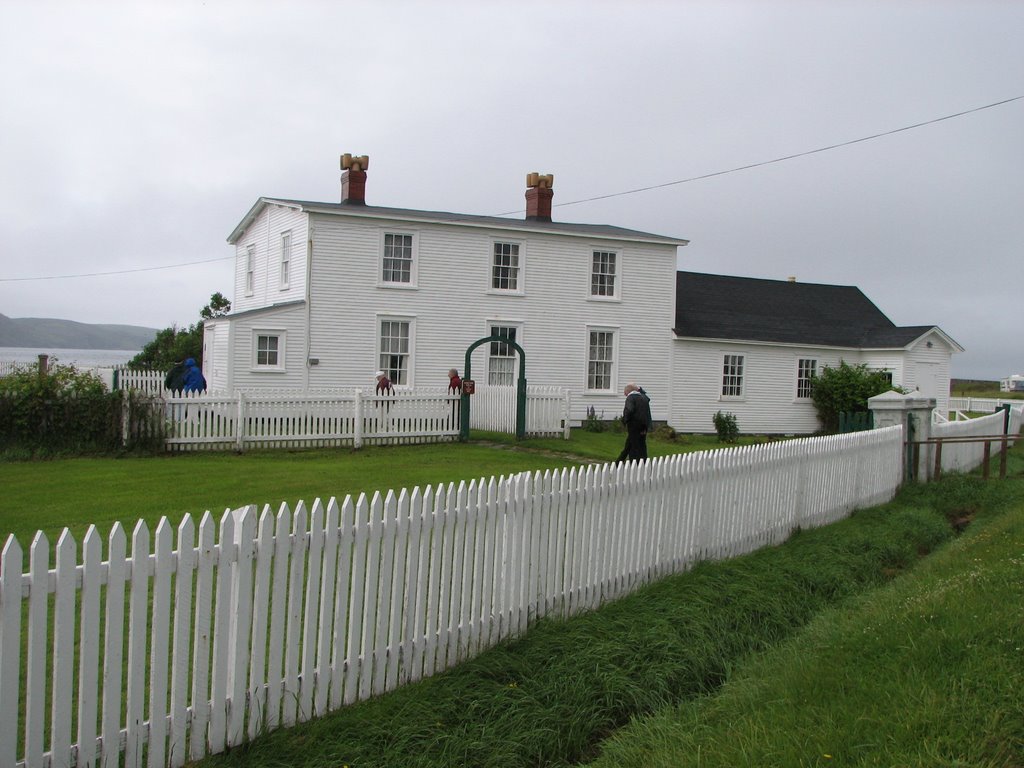
The Coaker home and row house for the captains
                                   3412 3413


We headed for the town of Ellison and to Puffin Point. On the way we did come upon another interesting rock formation where the water is enlarging a hole it has worn through the rock.
                                                   3416 3418


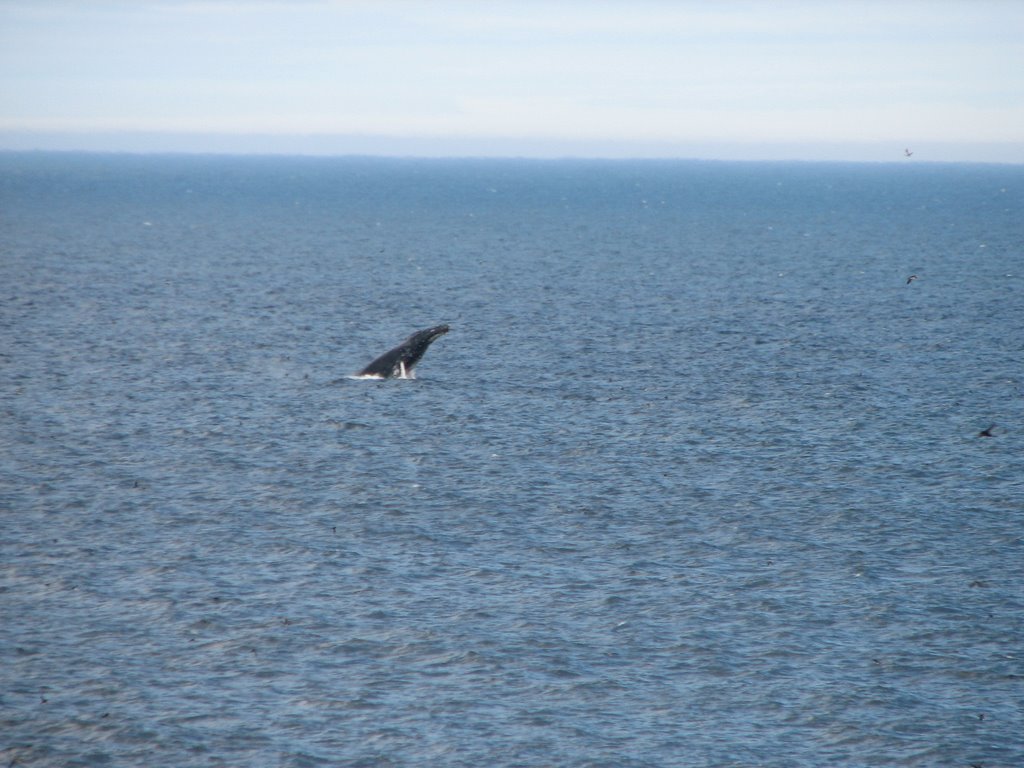
It was a bit of a walk to the site. Along the way I did find more interesting  rocks to take pictures of. Along with the Puffins there were whales. Most appeared to be humpbacks.
                                 3422 3426


                                                           3428 3440       


This one is a mother and her calf swimming away from were I was standing.
3456

On the way back we stopped at the Puffin Festival. We had a “Jiggs Dinner”. This a local Newfound land dish and consists salt beef, and five different vegetables. They are all boiled together in a pot and scooped out on a plate. The salt beef tasted a lot like corned beef. It added enough salt to the vegetables that for me no additional salt was needed.
After lunch we stopped for a few picture of root cellars. These cellars, typically dug into the side of ah, served as a family refrigerator for storing root vegetables.
                           3478 3479

Tuesday, 19 July 2011

St. John's newfoundland

July 12-14, 2011.   We drove off the ferry and started towards St. John’s some 88 miles away. 

We were on a two lane road, making good time when we saw a slow down ahead and sure enough we came upon two moving chicanes. Soon we got around them and the road became a divided highway.
6742 6750


Through out the Atlantic Provinces I have been amazed at all the beautiful inlets, coves, estuaries and lakes. There is a tremendous amount of waterfront property that any developer would sell his soul for. However, this beautiful property is not for the weak in the winter.
6768 3108


After setting up, having dinner and getting a good night’s rest we were off touring again.

Our first stop was in the village of Quidi Vidi which has two claims to fame, possibly the oldest house on the island and a local brewery. The brewery not only has a gift shop but they had for sale 6-packs of several of the beers they brew. I think the weight of our buss doubled when the guys came back with the beer.
3113 3127 


In the past as today protected harbors were essential to protect the fishing boats, ships and residents. Quidi Vidi’s  harbor falls into this category as you can’t see the open ocean from it’s docks.
3117P
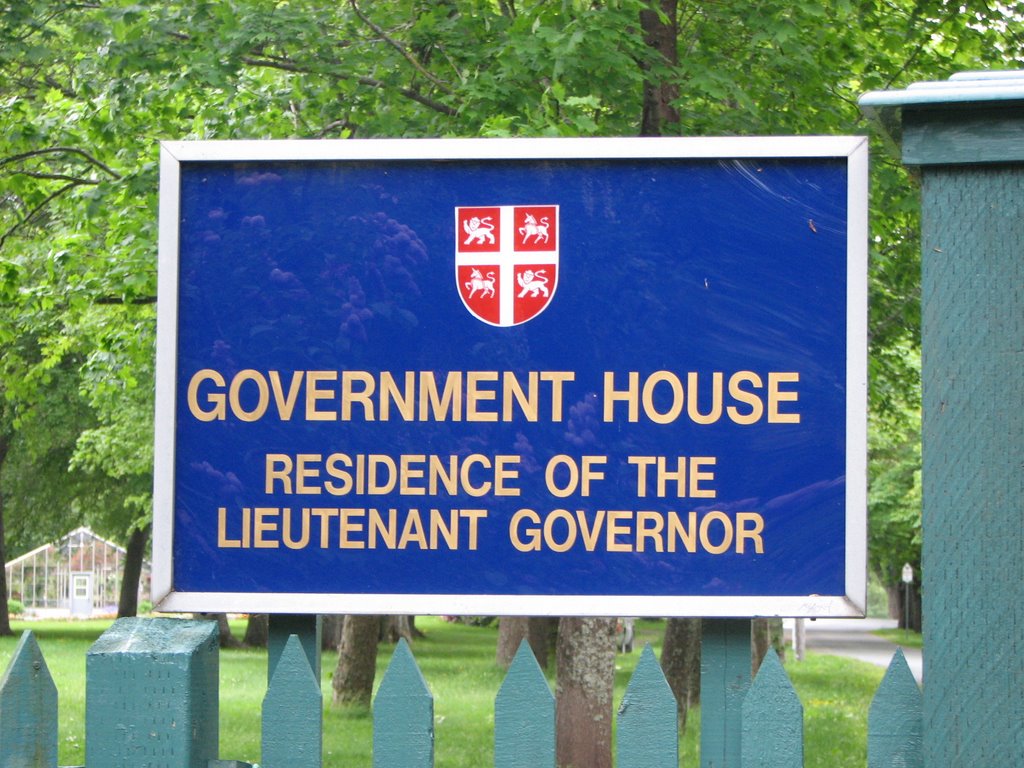
Each province had a governor who was appointed to the position by the Prime Minister rather than elected by the people. It was usually a person who had the right political connections. We visited the grounds of Government House.
3130 3134


                             3136 6798                       


As we were walking around the grounds it started to rain so it was back on the buss and on to Signal Hill

Signal Hill is the high ground that overlooks the inlet and harbor of St. John’s. It has always been used for defense but also as an observation and communication point. It is here that in 1901, Marconi received the first wireless trans-Atlantic communication. France and England fought many battles over the location. From the inlet , the waterway narrows to about 200 feet before widening into the harbor.
            3147 6815                                  


The first defenses of the harbor were shores batteries on either side of “the narrows”. The French held St. John’s in1696, 1705 and 1709. The treaty of Utrecht in 1719 gave the territory to the English but peace was only temporary as the French captured St. John’s again in June of 1762. The French succeeded by attacking from the land side rather than the sea. In September of that year the English used the same tactic to essentially walk up Signal Hill surprise the defenders and take the hill for the final time. After a night of mortar bombardment into the French positions below, the French surrendered St. John’s for the final time. Today, Cabot Tower sits at the top of Signal Hill.
                          3140.3c  6809                             


As we looked at the harbor we could at the city and dock area that was our next stop. We were near the point where the narrows opened into the harbor.  We walked on one of the docks and looked at the fishing boats. I took a picture of a hydraulic powered reel that the fishermen used to haul in their crab traps. Snow Crabs are their primary catch. Across the water we could see the houses that are built on the hillside. They have a marvelous view of the activity in the harbor.
           6831 6834               


        3169  3167                          


                        6829 3173               


After the docks we went to lunch. I was sorry that I didn’t have my camera with me. The food was excellent and the presentation of the salad, main course and dessert was wonderful and worthy of a picture.

In the mid 1830’s the more than 100,000 Catholics needed to replace an old wooden chapel that could only hold a few hundred worshipers. Bishop Fleming led the effort to build a grand church and construction started and was unfinished when a then ailing bishop Fleming said the first mass. The cathedral was finished by his successor and consecrated on September 9th, 1855.
On display is the sculpture Redeemer in Death, one of three that exist today. There are 65 stained glass windows. In 1983 it was declared a National Historic Site by the Government of Canada and1955 it was given the honorary rank of “Minor Basilica”.
                               3197 3180a                             


                               3182 3179                                            


                                  3188
We then went to the Motherhouse to see the sculpture of the “Veiled Virgin”.  It was sculpted by Giovanni Strazza from Carrera Marble, a marble with no flaws.
3201
Our last stop for the day was the Cape Spear National historic Site. There has been a lighthouse here since 1836. During WWII, from 1941 to 1945 American and Canadian Troops were stationed here and two 10” guns at the tip of the Cape provided coastal defense for ST. John’s harbor. We had some fun poising for pictures here as it is the most easterly point in North America. There were whales’ off-shore and Jackie caught a picture of a spout. Though difficult to see, it is the white blur in the middle of the picture.
                               3227 3215                    


                                     3218 3219                     


6877c